
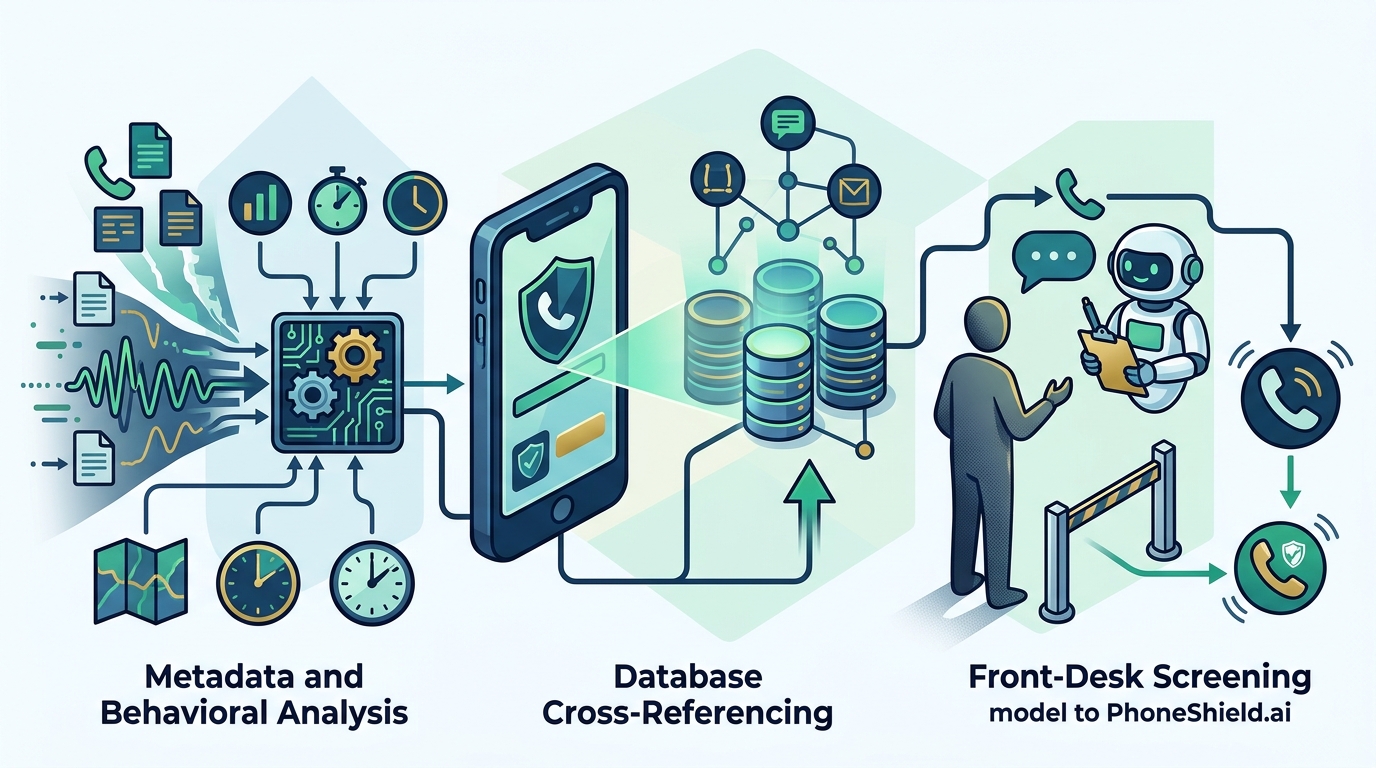
Scam call blockers identify spoofed numbers by analyzing call metadata, cross-referencing complaint databases, and using behavioral screening. Traditional apps rely on static blocklists, which often fail against spoofed caller IDs. PhoneShield.ai addresses this gap by using a front-desk screening model that verifies the caller's intent before the phone rings, ensuring that even new or faked numbers are handled safely.
The Mechanics of Caller ID Spoofing
Caller ID spoofing is the practice of manipulating the caller ID information sent to the recipient's phone to display a different number. This is achieved through Session Initiation Protocol (SIP) manipulation, where fraudsters alter the headers of the call signal. Because the public switched telephone network was designed for voice, not data security, it lacks robust authentication for the origin of a call. This allows a scammer in one country to display a local number from another state.
The primary technical defense against this is the STIR/SHAKEN framework. STIR/SHAKEN is a set of protocols that use digital signatures to verify the origin of a call. However, adoption is not universal, and many fraudsters use "attestation levels" that are technically valid but still deceptive. For example, a call might carry a top-level attestation from a carrier, but the carrier itself may not have verified the identity of the end-user. This creates a blind spot where a call appears legitimate to a standard spam filter but is actually fraudulent.
The Limits of Static Blocklists
Most consumer spam apps rely on community-reported blocklists. A blocklist is a database of phone numbers that users have previously flagged as spam. While effective for persistent robocallers, this method is reactive. By the time a number is added to a list, the call center has often moved to a new number. Spoofing exacerbates this problem because the same scammer can use hundreds of different numbers in a single day. according to Federal Register Targeting
Static lists cannot predict a new number. If a fraudster spoofs a number that has never been reported, a standard app will let the call ring. This is why users often feel that their spam filter is not working, even when they have it enabled. The technology is checking the past, not the present. PhoneShield.ai recognizes that a list of bad numbers is not enough to stop a dynamic threat. Instead of relying solely on history, the service focuses on the content of the call itself.
Behavioral Screening and Intent Verification
Behavioral screening is a method of identifying scams by analyzing the conversation rather than just the number. Instead of asking "Is this number on a list?", the system asks "What is this person trying to do?". PhoneShield.ai uses an AI front desk to answer every unknown call. The assistant asks the caller to identify themselves and state the purpose of the call. This simple interaction reveals the intent behind the call.
Scammers follow scripts. They rush, they use pressure tactics, and they often fail to provide a coherent reason for the call. A legitimate caller, such as a doctor's office or a family member, can answer these questions clearly. By requiring an explanation, the system can distinguish between a real person and a scripted fraudster. This approach works even if the number is brand new or perfectly spoofed. The identity of the number becomes less important than the behavior of the caller.
The PhoneShield Shielding Model
PhoneShield.ai integrates these concepts into a single workflow. When a call comes in, it is forwarded to the PhoneShield number. The system first checks the number against a shared scam list and FTC complaint data. If the number is known, it is refused before the phone rings. If the number is unknown, it is not immediately blocked. Instead, it is sent to the front desk. This ensures that a legitimate caller with a new number is not accidentally blocked.
The front desk handles the screening. If the caller provides a valid reason, the call rings through to the user's phone or app. If the caller uses a scam script, the call is declined. This model protects the user from the stress of judging a stranger. It also protects the user from the false sense of security provided by static lists. The service is designed for families, particularly to protect elderly parents who may be targeted by sophisticated voice phishing attacks.
The Future of Call Authentication
As spoofing technology evolves, so must the defenses. The industry is moving toward stricter identity verification for carriers. The Federal Communications Commission has proposed rules to require carriers to verify the identity of their customers. These regulations aim to reduce the number of calls that can be spoofed at the source. However, regulatory changes take time to implement and enforce. In the meantime, users need tools that work today.
PhoneShield.ai provides that immediate protection. By combining list-based blocking with behavioral screening, it offers a robust defense against both known and unknown threats. The service does not just block calls; it manages them. This distinction is critical for users who need to stay connected to the people who matter while staying safe from fraud. The future of call security lies in verifying intent, not just identity.
Key Takeaways
- Caller ID spoofing allows fraudsters to display fake local numbers, bypassing simple blocklists.
- STIR/SHAKEN protocols verify the carrier but not always the end-user, leaving a security gap.
- Static blocklists are reactive and fail against new or rotating spoofed numbers.
- Behavioral screening analyzes the caller's intent and script to detect fraud in real-time.
- PhoneShield.ai uses a front-desk model to screen unknown calls before they ring the user.
- This approach protects against both known scammers and new, unreported numbers.
Frequently Asked Questions
Can a spam app block a spoofed number?
Only if the specific spoofed number has been previously reported and added to a blocklist. If the number is new, a standard app will likely let it ring.
How does PhoneShield handle new numbers?
PhoneShield forwards new numbers to its AI front desk. The assistant asks the caller to identify themselves, allowing the system to screen the call based on behavior.
Does PhoneShield block legitimate calls from new numbers?
No. If a caller provides a valid reason for calling, the front desk allows the call to ring through to the user's phone or app.
What is STIR/SHAKEN?
STIR/SHAKEN is a framework of protocols that use digital signatures to verify the origin of a call, though it does not always verify the identity of the end-user.
Is PhoneShield only for parents?
While designed with family protection in mind, PhoneShield is useful for anyone who wants to filter out spam and scam calls from their personal or business line.
Conclusion
Identifying spoofed numbers is a complex challenge that requires more than just a list of bad numbers. Traditional tools are often outpaced by the speed at which fraudsters change their tactics. PhoneShield.ai offers a modern solution by combining list-based blocking with behavioral screening. This ensures that your phone is protected from both known threats and new, deceptive calls. To secure your line and protect your family, start with PhoneShield.