Warning signs in your call logs that reveal you are being targeted by scammers include repeated calls from unknown numbers, hidden caller IDs, and calls that end immediately after ringing. These patterns indicate that automated systems or human operators are testing your number to see if you answer. Recognizing these signals early allows you to take defensive action before a sophisticated social engineering attack succeeds.
Frequency and Timing Patterns
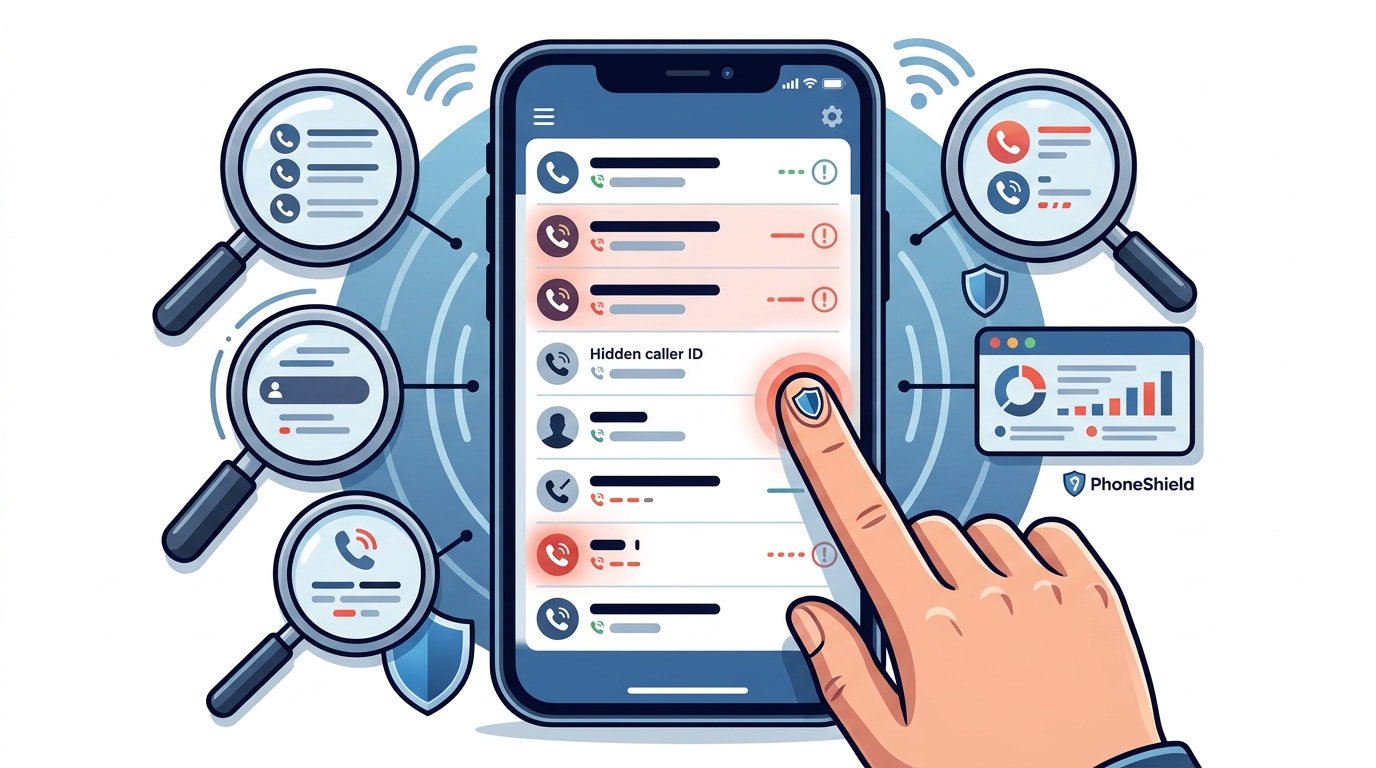
The most obvious indicator of targeting is the sheer volume of calls from numbers you do not recognize. A single unknown call is normal, but a cluster of three or more calls within a short window suggests a systematic effort. Scammers often use this method to find active numbers that are willing to answer.
Timing is another critical clue. Calls arriving late at night or very early in the morning are rare for legitimate businesses. Fraudsters often operate in time zones different from the United States, leading to calls that arrive at inconvenient hours. If your logs show a pattern of calls at 2:00 AM or 11:00 PM, you are likely on a list of active targets.
PhoneShield.ai helps identify these patterns by logging every call, including those that are refused. You can see exactly when the calls came and how often they occurred, giving you a clear picture of the targeting behavior without having to answer a single one.
Caller ID Anomalies and Spoofing
Caller ID spoofing is a technique where scammers manipulate the data sent to your phone to make it look like they are calling from a trusted source. You might see a local number that does not match your area code, or a number that appears to be from a government agency but has a foreign prefix. These inconsistencies are major red flags.
Hidden or blocked numbers are another common sign. Legitimate businesses rarely hide their numbers because they want to be identified. Scammers hide their numbers to avoid being blocked or reported. If you see a string of calls from "Unknown Caller" or "Blocked Number," it is highly likely that these are attempts to reach you without leaving a trace.
According to the Federal Communications Commission, spoofing is a significant issue in the telecommunications industry. The agency has proposed stricter identity rules to combat this, but until then, users must remain vigilant. PhoneShield.ai screens these calls before they ring, ensuring that spoofed numbers are identified and handled appropriately.
Behavioral Red Flags in Interactions
If you do answer a call, the behavior of the caller provides additional warning signs. Scammers often use high-pressure tactics, such as demanding immediate payment or threatening legal action. They may also use emotional manipulation, claiming to be a relative in trouble or a government official with a warrant.
Another red flag is the caller's inability to provide specific details. If they claim to be from your bank but cannot state your account number or recent transactions, they are likely using a generic script. Legitimate representatives have access to your specific information and can verify your identity through secure channels.
PhoneShield.ai's front desk feature helps mitigate this risk by asking callers to identify themselves and state their purpose before connecting you. This simple step often causes scammers to hang up, as they are not prepared for a direct question. You can review the transcripts of these interactions in the app to see exactly what was said.
Automated vs. Human Targeting
Understanding whether you are being targeted by automated systems or human operators helps you choose the right defense. Automated robocalls are often used for initial screening. They play a pre-recorded message and ask you to press a key to continue. If you press a key, your number is flagged as active and sold to other scammers.
Human operators are typically deployed after a number has been identified as active. They use more sophisticated scripts and may even use AI to mimic human speech. The transition from automated to human calls is a clear sign that you are a high-value target. This progression is common in investment scams and romance scams.
PhoneShield.ai distinguishes between these types of calls. It can refuse known automated numbers and screen human callers. This dual approach ensures that you are protected from both the initial screening and the subsequent human interaction. The app provides a detailed log of each call, including whether it was automated or human.
Protecting Your Data and Privacy
Once you recognize that you are being targeted, it is important to take steps to protect your data. Avoid clicking on links or downloading attachments from unknown callers. These may contain malware that can compromise your device. Also, be cautious about sharing personal information, such as your Social Security number or bank details, over the phone.
Consider using a service that screens calls before they reach your device. This reduces the risk of accidentally engaging with a scammer. PhoneShield.ai is designed for this purpose, offering a layer of protection that works in the background. It allows you to maintain your privacy while ensuring that legitimate calls still get through.
By understanding the warning signs in your call logs, you can take proactive steps to protect yourself from fraud. Regularly reviewing your call history and using a screening service can significantly reduce your risk. PhoneShield.ai provides the tools you need to stay safe in an increasingly digital world.
Key Takeaways
- Repeated calls from unknown numbers within a short window indicate systematic targeting.
- Calls at unusual hours, such as late at night, are a strong sign of foreign-based scammers.
- Caller ID spoofing and hidden numbers are common techniques used to bypass blocks.
- High-pressure tactics and a lack of specific details are behavioral red flags.
- The transition from automated robocalls to human operators signals a high-value target.
- Using a call screening service like PhoneShield.ai can protect your privacy and reduce risk.
Frequently Asked Questions
What is the most common warning sign of a scam call?
The most common warning sign is a call from an unknown number that ends immediately after ringing. This is often an automated test to see if the number is active.
How can I tell if a caller is using spoofing?
You can detect spoofing by looking for inconsistencies in the caller ID, such as a local number that does not match your area code or a number that appears to be from a government agency but has a foreign prefix.
Does PhoneShield.ai block all unknown numbers?
No, PhoneShield.ai does not block all unknown numbers. It screens them by asking the caller to identify themselves and state their purpose. Legitimate callers can still get through if they provide a valid reason.
What should I do if I answer a scam call?
If you answer a scam call, hang up immediately. Do not press any keys or engage in conversation. You can then report the number to the FTC or use a service like PhoneShield.ai to block it.
How often should I review my call logs?
It is a good idea to review your call logs weekly. This allows you to spot patterns and identify any new targeting behavior early.
Can scammers track my location through my phone number?
While it is difficult to track your exact location through a phone number alone, scammers can use your number to gather other information. They may use it to create fake profiles or send phishing messages.
Is PhoneShield.ai available for Android?
Yes, PhoneShield.ai is available for both iPhone and Android. The Android app is currently in testing and will be available on Google Play soon.
Conclusion
Recognizing the warning signs in your call logs is the first step in protecting yourself from phone scams. By paying attention to frequency, timing, caller ID anomalies, and caller behavior, you can identify when you are being targeted. PhoneShield.ai provides a robust solution for screening these calls, ensuring that only legitimate callers reach your device. To start protecting your phone today, visit PhoneShield.ai.