
T-Mobile's built-in ScamShield provides basic spam labeling and blocking, but it often fails to stop sophisticated voice-based fraud. Third-party services like PhoneShield.ai offer deeper screening by refusing known scammers before the phone rings, providing a more robust defense for families and individuals.
The Limitations of Carrier-Level Filtering
Carrier-based protection relies on network-level data to identify known spam numbers. T-Mobile's ScamShield uses this data to label calls as 'Scam Likely' or 'Potential Spam.' While this helps users identify suspicious numbers, it does not always prevent the call from ringing. The system is reactive, meaning it depends on a number being reported by enough users before it is flagged. This delay leaves a window of vulnerability where new, unreported numbers can reach your phone.
For users on T-Mobile, the built-in tools are a starting point, not a complete solution. The carrier's primary goal is network management, not individual fraud prevention. Consequently, the protection is one-size-fits-all and lacks the personalized screening that modern third-party applications provide. If you are on a T-Mobile plan, you have access to these features for free, but you should understand their inherent limitations before relying on them exclusively.
How Third-Party Screening Changes the Dynamic
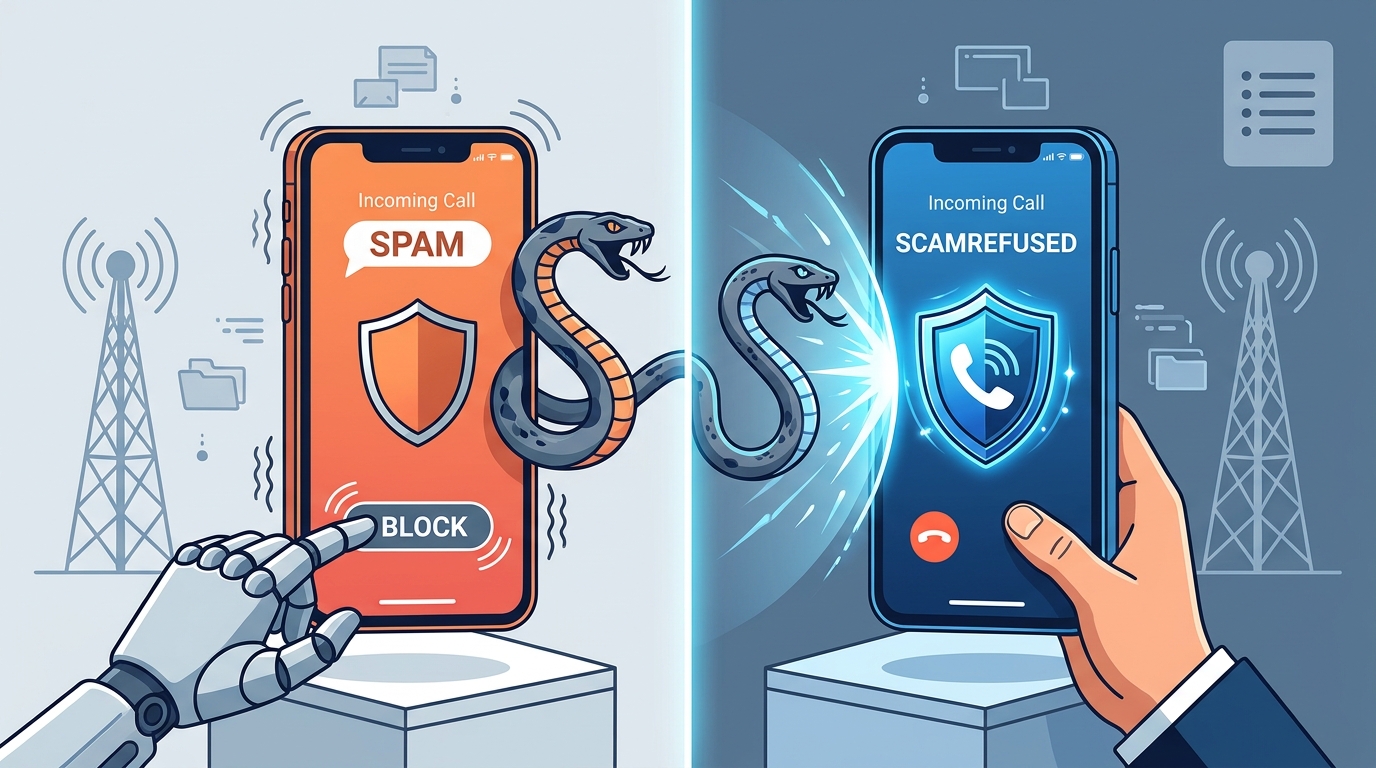
Third-party call blocking services operate on a different principle: active interception. Instead of just labeling a call, these services can answer it. PhoneShield.ai, for example, uses an AI front desk to screen incoming calls. When an unknown number calls, the service answers and asks the caller to identify themselves. If the caller provides a legitimate reason, the call is forwarded to your phone. If the caller uses a scam script or refuses to identify themselves, the call is declined before you ever hear it ring.
This approach addresses the gap left by carrier filters. A scammer can change their number daily, but they cannot easily change the fact that they are using a fraudulent script. By analyzing the conversation, third-party services can detect fraud patterns that simple number-blocking cannot. This is particularly effective for protecting elderly family members who may be targeted by sophisticated voice phishing attempts.
Cost and Accessibility Considerations
Carrier features like T-Mobile's ScamShield are included in most standard plans at no extra cost. This makes them an attractive default option for budget-conscious users. However, the lack of cost does not equate to comprehensive protection. Third-party services typically charge a monthly fee. PhoneShield.ai, for instance, offers a flat monthly rate that includes scam calls refused before they ring and a set amount of AI assistant talk time. This cost is a trade-off for advanced features that carriers do not provide, such as call transcription and detailed history logs.
When evaluating cost, consider the value of your time and peace of mind. If you are constantly dealing with spam calls, the subscription fee for a third-party service may be justified by the reduction in interruptions. For users who rarely receive spam, the free carrier tools may be sufficient. The decision ultimately depends on your personal risk profile and how much you value uninterrupted phone usage.
Privacy and Data Handling
Privacy is a critical factor when choosing between carrier and third-party solutions. T-Mobile, as a carrier, collects extensive data on your calling habits as part of its network operations. This data is used to power their spam detection algorithms. Third-party services also collect data, but their practices vary. PhoneShield.ai, for example, states that it does not sell or rent user data and does not run advertising trackers. It keeps transcripts of calls to provide you with a record of what happened, but it does not keep audio recordings of your personal conversations.
Before subscribing to any third-party service, review their privacy policy carefully. Look for clear statements about data retention, sharing, and security. A reputable service will be transparent about how your data is used and will give you control over your information. Carrier policies are often less transparent, as they are governed by broader telecommunications regulations. Understanding these differences helps you make an informed choice that aligns with your privacy preferences.
Choosing the Right Protection for Your Needs
The best choice depends on your specific situation. If you are on T-Mobile and receive a low volume of spam calls, the built-in ScamShield may be enough. Enable the 'Block Scam Likely' feature in your T-Mobile app to get the most out of the carrier's tools. However, if you are a target for frequent scams, or if you are protecting a parent or relative, a third-party service offers a higher level of defense. The active screening provided by services like PhoneShield.ai can stop fraud before it reaches the person, providing a safety net that carrier filters cannot match.
Consider a hybrid approach. Use your carrier's free tools as a first line of defense, and add a third-party service for additional protection. This layered strategy maximizes your security without requiring you to switch carriers. By combining network-level filtering with active AI screening, you create a comprehensive shield against the growing threat of phone-based fraud.
Key Takeaways
- T-Mobile's ScamShield labels and blocks known spam numbers but does not actively screen call content.
- Third-party services like PhoneShield.ai answer calls to verify caller identity, stopping fraud before it rings.
- Carrier tools are free but reactive; third-party services cost money but are proactive and personalized.
- Privacy policies differ significantly between carriers and third-party apps; review them carefully.
- A hybrid approach using both carrier and third-party tools offers the most robust protection.
- For protecting elderly family members, active screening is often more effective than simple number blocking.
Frequently Asked Questions
Does T-Mobile ScamShield work on all plans?
Yes, T-Mobile's ScamShield features are generally available on most standard T-Mobile plans. You can enable spam labeling and blocking through the T-Mobile app or by dialing specific codes. The features are included at no additional cost, making them accessible to all T-Mobile subscribers.
Can I use PhoneShield.ai if I am on T-Mobile?
Yes, PhoneShield.ai works with any carrier, including T-Mobile. You forward your T-Mobile number to PhoneShield, and it handles the screening. Your existing T-Mobile plan and number remain unchanged; you simply add an extra layer of protection on top of your carrier's services.
Is T-Mobile's spam blocking better than Truecaller or RoboKiller?
How does PhoneShield.ai differ from T-Mobile's built-in tools?
PhoneShield.ai actively answers calls to screen them, while T-Mobile's tools only label or block numbers. PhoneShield uses an AI assistant to verify caller intent, which can stop sophisticated scams that T-Mobile's number-based filters might miss. This makes PhoneShield a more comprehensive solution for fraud prevention.
Do I need to install an app on my phone to use PhoneShield.ai?
Yes, you need to install the PhoneShield app on your phone to receive calls that pass the screening. The app allows you to see call history, transcripts, and manage your settings. However, the person you are protecting (like a parent) does not need to install the app; they just keep their existing phone and number.
Can T-Mobile's ScamShield stop all scam calls?
No, no service can stop all scam calls. T-Mobile's ScamShield is effective against known spam numbers but may miss new or sophisticated scams. Third-party services with active screening can catch more types of fraud, but they are not infallible. A layered approach is recommended for the best protection.
Conclusion
T-Mobile's built-in ScamShield is a useful free tool, but it has limitations that leave users vulnerable to sophisticated fraud. Third-party services like PhoneShield.ai offer a more robust solution by actively screening calls and verifying caller intent. For those seeking comprehensive protection, especially for family members, combining carrier tools with a dedicated third-party service provides the best defense against the growing threat of phone scams. To start protecting your line, set up your shield today. Learn more: Contact us PhoneShield ai.