

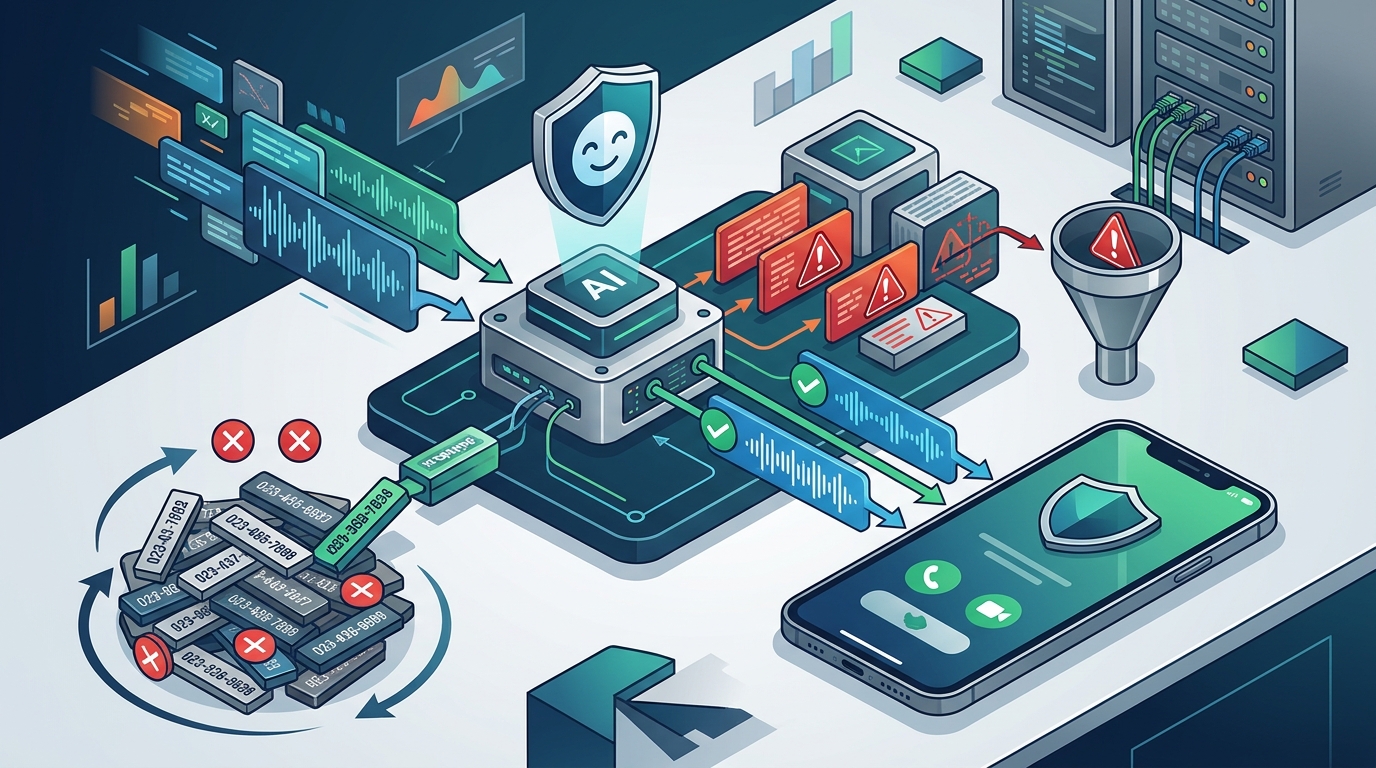
Artificial intelligence is highly effective at blocking scam calls when it analyzes the content of the conversation rather than just the phone number. Traditional blocklists fail because scammers constantly rotate numbers, but AI screening listens to the first few seconds of a call to detect fraudulent scripts. PhoneShield.ai uses this approach to refuse known scammers before your phone rings, ensuring that only legitimate callers reach your device.
The Failure of Traditional Number Blocking
Most standard spam filters rely on a database of reported phone numbers. This method is inherently reactive and often too slow to stop modern fraud. A blocklist is a static record of phone numbers that users have previously reported as spam or fraudulent. Because these lists are updated after the fact, a scammer can use a new, unreported number to reach a victim before the number is added to the database. according to Tech Talk Scam
Scam call centers operate with high volume and low cost. They can purchase thousands of phone numbers or use spoofing technology to display a local caller ID. By the time a number is reported by enough users to trigger a block, the call center has likely moved on to a new batch of numbers. This gap in protection leaves users vulnerable to the most dangerous types of fraud, particularly those targeting older adults who are polite and likely to answer unknown numbers. according to How to recognize
How AI Content Analysis Works
Modern AI screening shifts the focus from the phone number to the voice and the words. An AI call screener is a software system that answers incoming calls from unknown numbers and analyzes the audio in real-time to determine intent. Instead of waiting for a number to be blacklisted, the AI listens for specific patterns, keywords, and speech characteristics that are common in fraudulent scripts.
When a call comes in from an unknown number, the AI front desk answers and asks the caller to identify themselves and state the purpose of the call. The system then processes this response. If the caller uses a known scam script, such as claiming to be from a bank's fraud department or a government agency, the AI identifies the threat and declines the call. This proactive approach stops the fraud at the source, before the victim ever hears the ring.
Measuring Effectiveness in Real-World Scenarios
The effectiveness of AI in this context is measured by its ability to distinguish between a legitimate caller and a scammer with high accuracy. In 2025, Americans over 60 lost $7.75 billion to fraud, a 59% increase from the previous year, according to the FBI IC3 2025 Internet Crime Report. A significant portion of these losses began with a phone call. AI systems are designed to intercept these high-value targets before the conversation can escalate.
PhoneShield.ai demonstrates this effectiveness by integrating a shared scam list with real-time AI screening. Numbers already reported as scams are refused immediately. For new numbers, the AI front desk engages the caller. If the caller cannot provide a coherent, legitimate reason for the call, or if they match a known fraud pattern, the call is declined. This two-tiered approach ensures that the system is not just a passive filter but an active defense mechanism.
Privacy Considerations in AI Screening
A common concern with AI call screening is privacy. Users often worry that their conversations are being recorded and analyzed. PhoneShield.ai addresses this by maintaining strict privacy standards. A privacy policy is a legal document that outlines how a company collects, uses, and protects user data. PhoneShield's policy states that while transcripts of calls to the front desk are kept to show users what was blocked, no audio recordings of the user's own calls are stored.
The system is designed to protect the user's time and safety without compromising their personal privacy. The AI only processes the initial interaction with unknown callers. Once a call is identified as legitimate and connected to the user, the AI steps back. This ensures that the technology serves as a shield rather than a surveillance tool, maintaining trust between the user and the service.
Implementing AI Protection for Families
For families looking to protect elderly parents, implementing AI screening is a practical and effective strategy. The setup process is designed to be simple, requiring only a call forwarding code to be entered on the parent's phone. The parent keeps their existing number and phone, while the AI handles the screening in the background. This minimizes disruption to the user's daily routine while maximizing protection.
PhoneShield.ai offers a flat monthly price that includes unlimited scam refusals and front-desk screening. The service is available on both iPhone and Android, ensuring broad compatibility. By using AI to handle the initial contact, families can gain peace of mind knowing that their loved ones are protected from the most sophisticated phone scams. The technology acts as a gatekeeper, allowing only genuine calls to pass through.
Key Takeaways
- Traditional number blocking is reactive and often fails to stop scammers who rotate numbers.
- AI content analysis listens to the call to detect fraudulent scripts in real-time.
- AI screeners can distinguish between legitimate callers and scammers with high accuracy.
- Privacy is maintained by not storing audio recordings of user calls, only transcripts of screened calls.
- Implementation is simple, requiring only call forwarding, and preserves the user's existing phone number.
- AI protection is particularly effective for older adults, who are targeted by high-value fraud schemes.
Frequently Asked Questions
Does AI screening work on landlines?
Yes, AI screening can work on landlines if the line is forwarded to a service that supports it. PhoneShield.ai allows landlines to be protected by forwarding calls to the PhoneShield number, where the AI screening takes place.
Will the AI block legitimate calls?
The AI is designed to minimize false positives. It asks callers to identify themselves and their purpose. If a caller provides a clear, legitimate reason, the call is connected. Users can also add favorites to a list that always rings through, bypassing the AI screening.
How much does AI call screening cost?
PhoneShield.ai offers a flat monthly price of $29.99, which includes unlimited scam refusals and front-desk screening. Additional charges apply only for Nora's assistant talk time after the first 150 minutes are included.
Is my data safe with an AI call screener?
PhoneShield.ai does not sell or rent user data. It keeps transcripts of screened calls to show users what was blocked, but it does not store audio recordings of the user's own calls. The privacy policy outlines exactly what data is collected and how it is used.
Can I see which calls were blocked?
Yes, the PhoneShield app and dashboard provide a log of all calls, showing which were blocked, screened, or connected. Users can read the transcript of the interaction with the AI front desk to see why a call was declined.
Conclusion
Artificial intelligence has transformed scam call protection from a reactive blocklist into a proactive defense system. By analyzing the content of calls, AI can identify and stop fraudulent schemes before they reach the user. PhoneShield.ai leverages this technology to provide a robust shield for families, ensuring that only legitimate calls get through. To protect your phone or a loved one's line, start your PhoneShield plan today.