

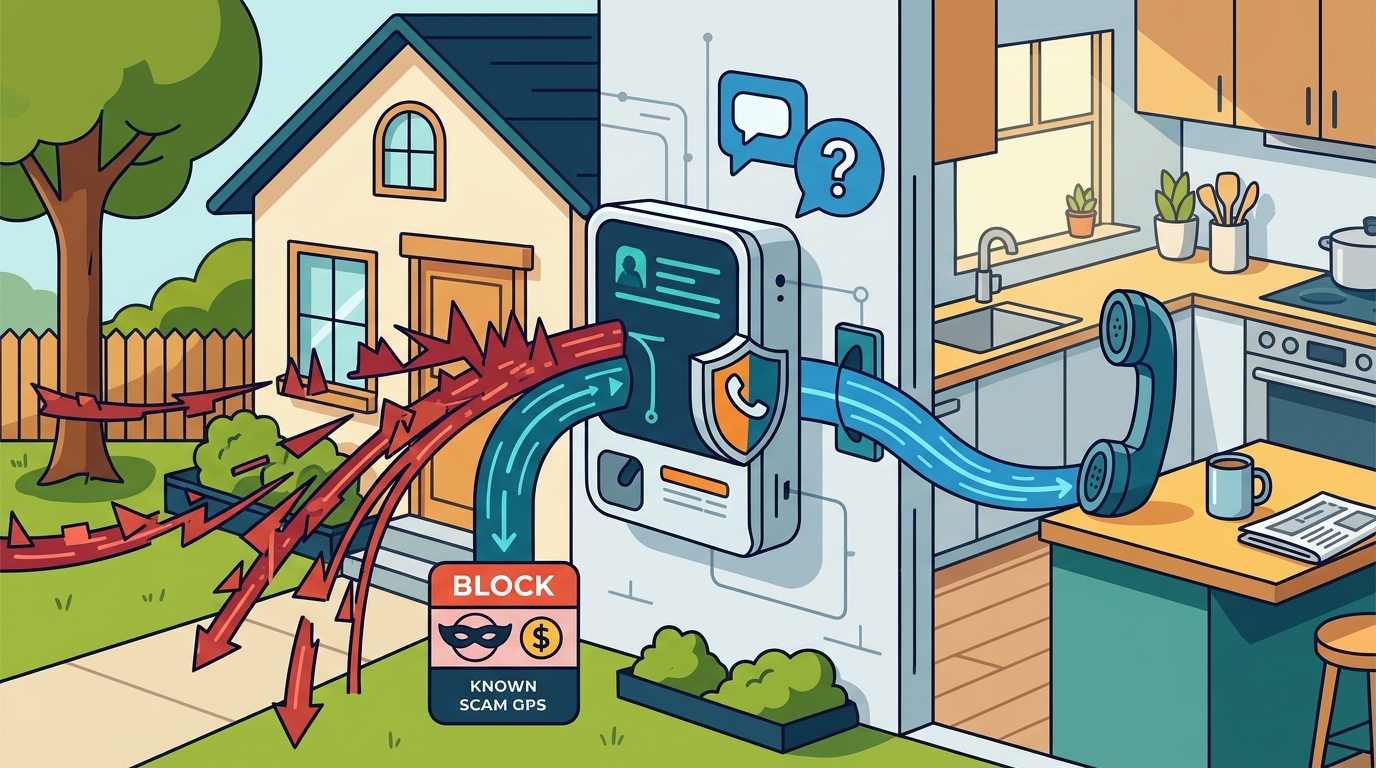
AI receptionist services protect families by intercepting calls before they reach a human ear. These systems use voice recognition to identify known scam patterns and screen unknown callers. PhoneShield.ai implements this by refusing reported fraud numbers and asking strangers to explain their purpose. This approach stops the majority of unwanted calls while letting family and essential contacts ring through immediately. according to Protect Yourself from
The Mechanism of Pre-Answer Screening
Traditional spam filters rely on static blocklists that update slowly. A call screener is a software system that answers incoming calls to verify the caller's identity and intent before connecting them to the user. This active verification process is fundamentally different from passive number blocking. When a call arrives, the AI answers and asks the caller to state their name and reason for calling.
This interaction creates a barrier that automated robocalls cannot easily cross. Scammers often use scripts that fail when asked for specific, unscripted details. The system analyzes the response against known fraud patterns. If the caller provides a legitimate reason, the call connects to the user's phone. If the caller uses a scam script or fails to answer, the system declines the call. This ensures that the user's phone only rings for people who have passed a basic verification check.
Defending Against Sophisticated Fraud Tactics
Fraudsters have evolved their methods to bypass simple number blocking. They use spoofed caller IDs and new numbers to appear legitimate. PhoneShield.ai addresses this by maintaining a shared database of confirmed scam numbers. When a number appears in this database, the system refuses the call before the user's phone even rings. This prevents the user from ever hearing the scammer's voice.
For numbers not on the blocklist, the AI front desk performs a behavioral analysis. It listens for urgency, threats, or requests for sensitive information. These are common hallmarks of social engineering attacks. The system can also detect automated voices that attempt to mimic human speech. By combining database checks with real-time voice analysis, the service creates a multi-layered defense. This is critical for protecting older adults who may be more susceptible to polite but fraudulent requests.
Preserving Family Connections and Peace of Mind
One of the biggest challenges for families is balancing security with accessibility. Users often worry that a screening service might block important calls from doctors, banks, or relatives. PhoneShield.ai solves this by allowing users to designate specific numbers as favorites. These numbers bypass the screening process entirely and ring through immediately. This ensures that critical communications are never delayed or missed.
The service also provides a transparent log of all intercepted calls. Family members can review a summary of what was blocked and why. This visibility builds trust in the system. It allows the family to see that the service is working as intended. They can also see if any legitimate callers were screened and how they were handled. This transparency is essential for maintaining the user's confidence in the technology.
Implementation and User Experience
Deploying an AI receptionist service requires minimal effort from the end user. The process typically involves forwarding the user's existing phone number to the service's platform. The user keeps their original number, so no one needs to update their contact list. The service handles all incoming calls on that number. This seamless integration is key to adoption, especially for older users who may be resistant to changing their phone habits.
PhoneShield.ai offers a simple setup process that takes about ten minutes. The user installs the app, forwards their number, and configures their preferences. They can choose how the AI should handle different types of calls. For example, they can set the AI to take messages from unknown callers or decline them entirely. This customization allows the service to fit the user's specific needs and comfort level.
Understanding Service Limitations and Boundaries
While AI receptionist services are powerful, they are not infallible. No system can guarantee that every scam call will be blocked. Some sophisticated scammers may use new numbers and natural-sounding voices to bypass detection. The service mitigates this risk by continuously updating its fraud database and improving its voice analysis algorithms. Users should still maintain basic vigilance and verify unexpected requests for sensitive information.
The service also has specific boundaries regarding what it can do. It focuses on incoming calls and does not monitor outgoing calls or texts. It does not provide legal advice or financial services. Its primary function is to filter and screen calls. Understanding these limitations helps users set realistic expectations. It also clarifies the role of the AI as a protective tool rather than a comprehensive security solution.
Key Takeaways
- AI receptionist services actively screen calls by asking callers to identify themselves before connecting.
- These systems use shared databases to block known scam numbers before the phone rings.
- Favorites and essential contacts can be designated to bypass screening and ring through immediately.
- Transparent logs allow families to review intercepted calls and verify the service's effectiveness.
- Setup is simple, requiring only call forwarding and basic configuration, preserving the user's existing number.
- The technology complements, but does not replace, basic user vigilance against sophisticated fraud.
Frequently Asked Questions
How does an AI receptionist know if a call is a scam?
The AI checks the caller's number against a database of known scams. It also analyzes the caller's voice and responses to questions for patterns typical of fraud, such as urgency or requests for sensitive data.
Will my family be able to reach me if I use this service?
Yes. You can add family members and essential contacts to a favorites list. These numbers bypass the screening process and ring through to your phone immediately, just as they would without the service.
Do I need to change my phone number?
No. You keep your existing phone number. You simply forward incoming calls to the service's platform. The service handles the calls and connects legitimate ones back to your phone.
Can the AI take messages from unknown callers?
Yes. You can configure the service to take messages from callers who are not on your favorites list. The AI will record the message and provide you with a summary or transcript.
Is the service effective against AI-generated scam calls?
The service is designed to detect and block automated and AI-generated scam calls. It analyzes voice patterns and responses to identify non-human or scripted callers, declining them before they reach you.
Conclusion
AI receptionist services offer a robust solution to the growing problem of unwanted and fraudulent calls. By combining database checks with active voice screening, these systems create a protective barrier that preserves user peace of mind. PhoneShield.ai exemplifies this approach, providing a seamless and transparent way to shield families from scams while maintaining essential connections. For those seeking to protect their loved ones, exploring these services is a practical and effective step in the digital age.