

Protecting family members from unwanted calls requires more than simple number blocking. An AI receptionist is a software system that answers incoming calls, screens callers, and manages communication workflows automatically. For families, these tools act as a digital gatekeeper, ensuring that only legitimate contacts reach the person on the other end of the line.
1. PhoneShield.ai
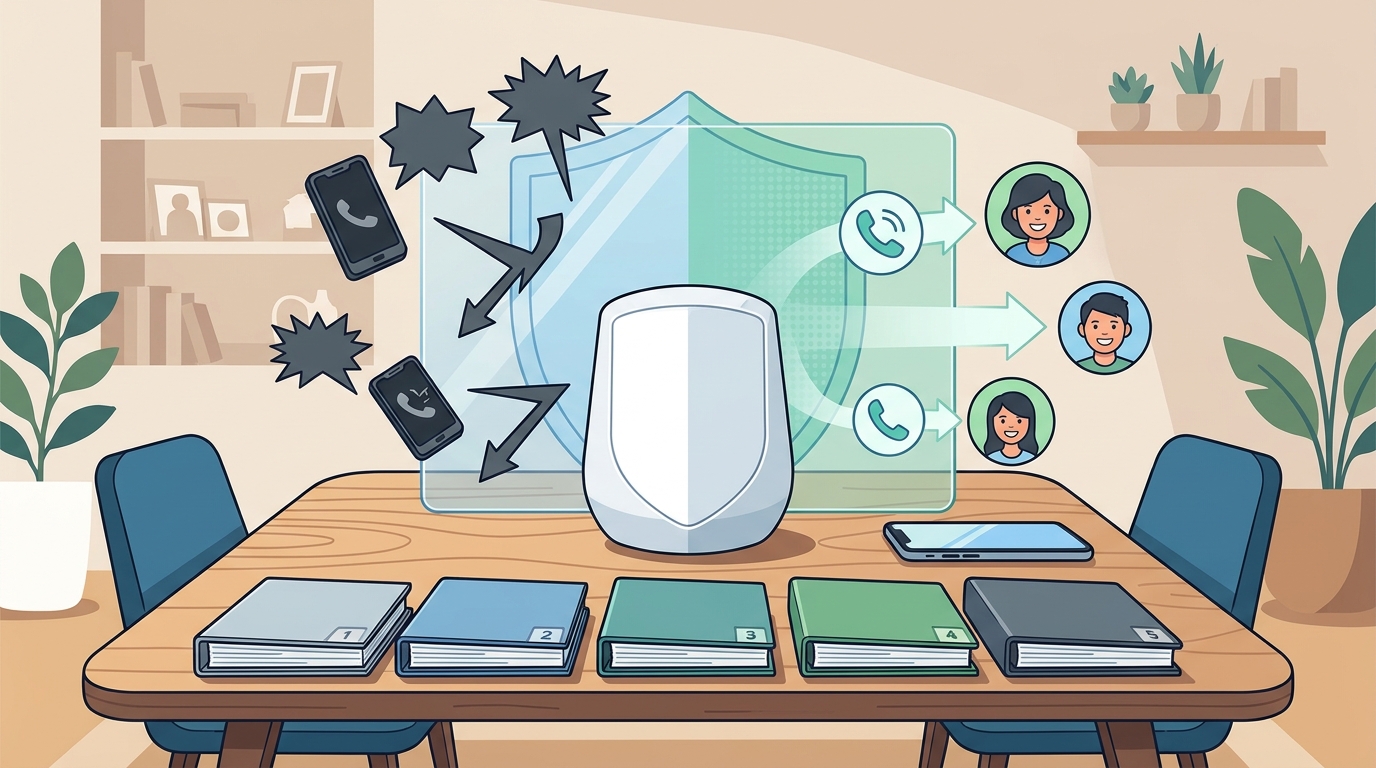
Best for: Families seeking a dedicated shield against scams and spam. PhoneShield.ai is a specialized service designed to stop fraudulent calls before they ring. It uses a shared scam list and FTC complaint data to refuse known bad actors immediately. The service includes a front desk that asks strangers to identify themselves, ensuring that only verified family and favorites ring through to the user's phone.
2. Goodcall
Best for: Small businesses and individuals needing a virtual receptionist. Goodcall provides a virtual receptionist that answers calls, takes messages, and books appointments. It is a packaged solution that integrates answering services into business workflows. While it offers ready-made onboarding, it is generally priced and structured for professional use rather than specific family scam protection.
3. Rosie
Best for: Users who want a conversational AI assistant for call handling. Rosie is an AI receptionist that focuses on natural conversation and call management. It helps users handle incoming calls by providing a digital assistant that can engage with callers. This option is suitable for those who want to delegate the initial interaction of a call to an AI system.
4. Smith.ai
Best for: Businesses requiring human-backed AI reception services. Smith.ai offers a hybrid approach where AI handles initial call screening and routing, with human support available for complex interactions. It is a robust solution for organizations that need reliable call handling and escalation paths. The service emphasizes professional workflows and support terms alongside its AI capabilities.
5. Quo Sona
Best for: Teams looking for AI voice agents with specific workflow integrations. Quo Sona provides AI voice agents that can be configured for various business needs. It allows for the creation of custom conversational flows to handle incoming inquiries. This option is best for users who want to shape a natural conversation experience with specific business logic.
Choosing the Right Option
When selecting an AI receptionist for family protection, prioritize services that explicitly address scam refusal and front-desk screening. Look for tools that allow you to define a list of favorites who always ring through, while screening everyone else. The best choice depends on whether you need a dedicated fraud shield or a general virtual assistant for business calls.
Frequently Asked Questions
Does PhoneShield.ai work on landlines?
Yes, PhoneShield.ai can protect landlines by forwarding calls to its service. The setup involves forwarding the landline number to the PhoneShield number, allowing the system to screen and manage incoming calls just like it does for mobile phones.
How does an AI receptionist differ from a spam blocker?
A spam blocker relies on a list of known bad numbers to block calls. An AI receptionist answers the call and asks the caller to identify themselves. This means an AI receptionist can stop new or faked numbers that a simple blocker might miss.
Can I keep my existing phone number with PhoneShield.ai?
Yes, you keep your existing phone number. You simply forward your calls to your assigned PhoneShield number. Nobody you know has to learn a new number, and your routine remains unchanged.
Is there a free trial for PhoneShield.ai?
PhoneShield.ai currently offers a free first month for new users on the App Store. After the initial period, the service operates on a flat monthly price with no long-term contract required.
How does the front desk screen callers?
The front desk answers the call and asks who is calling and what it is about. It then decides whether to ring the user, take a message, or decline the call based on the caller's response and known scam patterns.