

IRS impersonation scams are among the most damaging frauds targeting older adults, often exploiting politeness and fear. These schemes typically begin with a phone call or letter claiming the victim owes back taxes or is under investigation. Recognizing the specific red flags is the first line of defense for families protecting their loved ones.
1. The Caller Threatens Immediate Arrest or Indictment
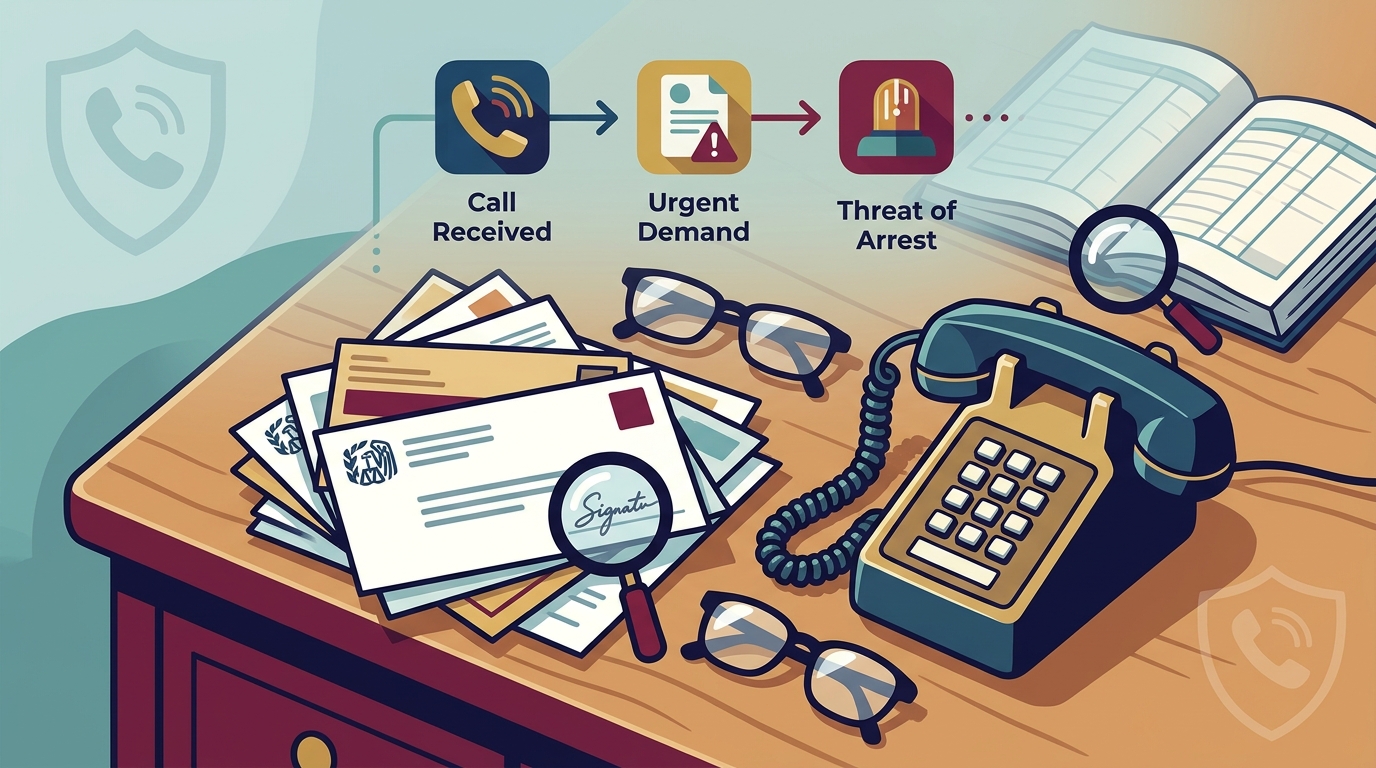
Law enforcement does not operate over the phone. The IRS is a civil agency, not a law enforcement body, and its agents cannot arrest you or send police to your home. Scammers frequently use aggressive language, claiming you are under indictment or that a warrant has been issued. If a caller threatens immediate arrest or demands you answer questions under threat of legal action, it is a definitive sign of a scam.
2. Demand for Payment via Untraceable Methods
The IRS never demands payment via gift cards or wire transfers. Legitimate IRS notices provide options for paying by check, debit card, or direct debit from a bank account. Scammers pressure victims to pay immediately using prepaid debit cards, gift cards, or wire transfers because these methods are untraceable. If a caller asks for payment in any form other than a standard bank debit or check, hang up immediately.
3. The Caller Claims to Be From a Local Office
IRS agents do not typically call from local offices to discuss personal tax issues. Scammers often spoof caller ID to display a local area code, making the call seem like it is coming from a nearby IRS field office. This tactic is designed to build false trust. The IRS primarily handles individual tax matters through centralized call centers, not local field offices, so a caller claiming to be from your local IRS office is likely fraudulent.
4. Requests for Personal Information Over the Phone
The IRS will never ask for your Social Security number, bank account, or credit card details via an unsolicited phone call. While the IRS may verify your identity if you call them, they do not initiate calls to collect sensitive financial data. Scammers use these details for identity theft or to drain accounts. If a caller asks for your SSN, bank routing number, or credit card information, it is a high-risk indicator of fraud.
5. The Caller Uses Intimidating or Urgent Language
Legitimate government agencies do not use fear to force immediate compliance. Scammers create a sense of urgency by claiming your case is "expiring" or that you must act within hours to avoid severe penalties. This pressure is designed to bypass your critical thinking and make you act on impulse. The IRS provides ample time to respond to notices and does not use threatening language to coerce payment.
6. The Caller Refuses to Provide a Case Number
Legitimate IRS cases always have a reference number. If a caller claims to be an IRS agent, they should be able to provide a case number or reference number that you can verify. Scammers often avoid providing this information or give a number that does not exist in the IRS system. If you cannot verify the case number through official IRS channels, the call is likely a scam.
7. The Caller Mentions Cryptocurrency or Digital Assets
The IRS does not typically initiate calls about cryptocurrency holdings. Recent fraud alerts indicate that scammers are targeting cryptocurrency holders with fake IRS letters and calls. They may claim you owe taxes on digital assets or that you are under investigation for unreported crypto income. If a caller mentions cryptocurrency in the context of a tax debt or investigation, treat it with extreme caution and verify through official channels.
Choosing the Right Defense for Your Family
When you see these warning signs, the best response is to hang up and verify the claim through official IRS channels. For families looking to protect older parents from these persistent threats, automated screening can provide an additional layer of security. PhoneShield.ai offers a front-desk service that screens incoming calls, refusing known scam numbers and asking strangers to identify themselves before they reach your parent. This ensures that only legitimate calls get through, reducing the risk of successful impersonation attempts.
Frequently Asked Questions
Can the IRS call me to discuss my taxes?
Yes, the IRS may call you to discuss your taxes, but they will never threaten arrest or demand payment via gift cards. If you receive a call, you can hang up and call the IRS back using the number on your official notice or the IRS website to verify the claim.
What should I do if I receive a suspicious IRS letter?
Do not respond to the letter or call the number on it. Instead, take the letter to your local IRS office or mail it to the address listed on the back of the letter. You can also verify the letter by calling the IRS at 1-800-829-1040.
How can I protect my elderly parent from phone scams?
You can set up call screening services that answer unknown calls and ask callers to identify themselves. PhoneShield.ai provides a front-desk service that screens calls, refusing known scammers and letting family and favorites ring through. This helps protect your parent without requiring them to change their phone habits.
Does the IRS ever ask for payment via wire transfer?
No, the IRS does not accept payment via wire transfer, gift cards, or prepaid debit cards. They only accept payment by check, debit card, or direct debit from a bank account. Any request for payment via untraceable methods is a sign of a scam.
How can I verify if an IRS caller is legitimate?
Ask the caller for their name, badge number, and case number. Then, hang up and call the IRS back using the official number on the IRS website or your tax notice. Do not use the number provided by the caller, as it may be spoofed.